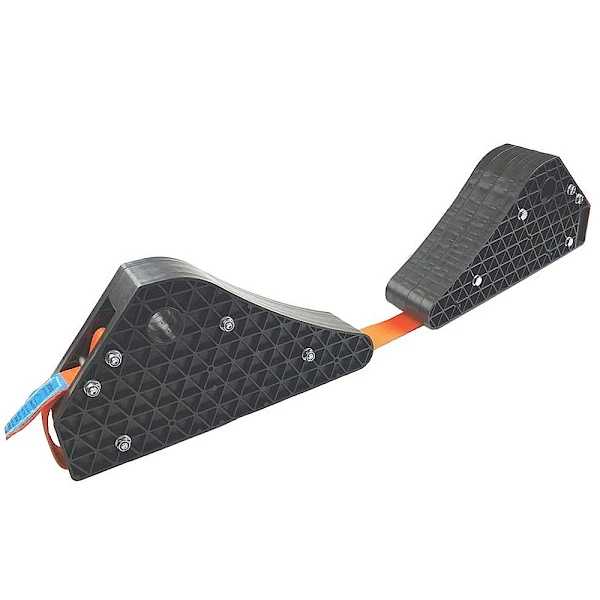
Cargo Chock - CC125
The Cargo Chock was initially developed at the request of the European paper industry. At the time, horizontal rolls of paper were secured by fastening wooden wedges to the loading deck with wire nails. However, to save weight and costs, the thickness of the loading deck was reduced from 5 cm to 2.5 cm. As a result, wire nails have insufficient grip, causing the rolls to become loose during transport. It turned out that there were no suitable solutions on the market. In response, Veltkamp developed the Cargo Chock. In collaboration with leading paper mills, the concept has been extensively tested and certified. This applies to a wide range of diameters, as well as road transport and intermodal transport.
The Cargo Chock was initially developed at the request of the European paper industry. At the time, horizontal rolls of paper were secured by fastening wooden wedges to the loading deck with wire nails.
However, to save weight and costs, the thickness of the loading deck was reduced from 5 cm to 2.5 cm. As a result, wire nails have insufficient grip, causing the rolls to become loose during transport. It turned out that there were no suitable solutions on the market.
In response, Veltkamp developed the Cargo Chock. In collaboration with leading paper mills, the concept has been extensively tested and certified. This applies to a wide range of diameters, as well as road transport and intermodal transport.